W12 Readings

Time-Travel // Divided Minds // Multiplicity

Screening: Timecrimes/ Los cronocrímenes (Nacho Vigalondo, 2007)

  • René Thoreau Bruckner, “ ‘Why did you have to turn off the time machine?’: The Spirals of Time-Travel Romance”
    – mechanisms of cinema, time travel and desire
    – Freud, Bergson and Deleuze
    – spatialize time or temporalize space
    – Is desire a matter of assembling time machines to escape from chronological, spatialized time?
    – to be alone and to be connected
    – that this loop has a loophole.
    – temporal paradox
    – two different kinds of time: external and internal; objective and subjective; external time and personal time.
    – Personal time has its own order, and for a time traveler this order differs drastically from that of external time
    – David Lewis; time is a category of space, a fourth dimension. Spatialised time has locations, stages and other properties of spatial extensity so it can accommodate travel.
    – complexity in the ability to imagine time machines and tell stories of time travellers requires nothing more complicated than this presumption that time comes under the heading “space”
    – Bergson, “when we make time a homogeneous medium (clocks) in which conscious states unfold themselves, we take it to be given all at once, which amounts to saying that we abstract it from duration. This simple consideration ought to warn us that we are thus unwittingly falling back upon space, and really giving up time.”
    – Duration can be understood only as constant, stateless transition, but the “cinematographical” way of thinking conceives time as a succession of states (“child,” “man”), like frames already captured on a filmstrip.
    – Wittenberg; Although any narration’s plotted ordering, or sjuzhet, may jump around in time, generally the underlying world of the story, or fabula, adheres implicitly to chronological order. However time-travel fiction fabricat4es other means of narrative coherence: time machines.
    – TTR, time-travel romance. seems possible to jump tracks, from one time to another.

– the Oedipus story
– jump tracks from one time to another
– Freud described the psychical “apparatus” itself as a veritable time machine
– path, a path through time, to traverse, it is to return to a previous state; a virtual.
– The placement of chronological order onto experiences emerges only in the working of the system Freud calls perception consciousness.
– repressed memories; are not ordered temporally, are not altered but the passage of time; they have no reference to time at all.
– timelessness and accumulation
– In dreams, Freud claims, adults sometimes perform “a translation of time into space” to disguise thoughts of childhood: “The characters and scenes are seen as though they were at a great distance, at the end of a long road, or as though they were being looked at through the wrong end of a pair of opera glasses.”
– unconscious state of dreams, spatialize time even when we are sleeping.
– the dreamwork serves to convert time into distance as part of the construction of a visual scene and/or as a visual experience involving an optical instrument: the opera glasses
– Vertigo is filled with spirals because they suggest ecstatic, swoon-inducing dizziness.
– The mathematical term for the line that cuts between two points on a curve is secant;
– Traveling on a spiral of time, however, one is always coming around again, passing very close by points already passed or past. One never passes directly through an already-past moment a second time but is always reeling toward one and always reeling away at the same time.
– The spiral and the interval are not two distinct times; they are two aspects—views from two distinct positions—of time “defined as the measure of movement.”
– Moving along on a spiral of time, one passes close by past moments in a never ending near miss. This can be called repetition with a difference, or more precisely, return at a distance: the mobile experience of an aspect across time, a leap that can be only visual, thus virtual.
– time-travel paradox
– “We could not live over again a single moment, for we should have to begin by effacing the memory of all that had followed. . .
– “becoming”
– La Jetee (marker) not linear but spatial
– Lajetee gives one of cinema’s plainest examples: the boy sees, at a slight distance, across time, and vice versa, the man sees the boy seeing, and remembers—re-members, quite literally—by inhabiting the past scene. But this remembering is a new scene of its own, not a pure repetition nor an expression of determinism. Rodowick points out, quite accurately, that La jetee presents time as essentially spatialized, an image of time as fixed and inalterable line.
– temporal other
– chronologically a result of causes “why dit you have to turn on the machine?”
– What is will if it already “was”?

  • Joel Hunter, “Time Travel.” 2017
    – Time travel is commonly defined with David Lewis’ definition: An object time travels if and only if the difference between its departure and arrival times as measured in the surrounding world does not equal the duration of the journey undergone by the object.
    – Einstein’s general theory of relativity.
    – Good science fiction stories often pay homage to the fundamentals of scientific knowledge of the time.
    – the features of an Einsteinian universe: a four-dimensional spacetime continuum that curves and in which time has the character of a spatial dimension (that is, there can be local variations or “warps”).
    – we make a distinction between time travel stories that might be possible within the canon of known physical laws and those stories that contravene or go beyond known laws.
    – Natural time travel stories can be analyzed for consistency with known physics while Wellsian time travel stories can be analyzed for consistency with logic.
    – the word “travel” implies two places: an origin and a destination.
    – But when we are speaking of time travel, where exactly does a time traveler go? The time of origin is plain enough: the time of the time traveler and the time traveler’s surrounding world coincide at the beginning of the journey. But “where” does the time traveler arrive? Are we equivocating in our use of the word ‘travel’ by simply substituting a when for a where? In truth, how do we conceive of a “when”—as a place, a locale, or a region?
    – time in philosophy
    How is time related to existence? Philosophy offers three primary answers to this metaphysical question: eternalism, possibilism, and presentism

    • The eternalist thinks that time, correctly understood, is a fourth dimension essentially constitutive of reality together with space. All times, past, present and future, are actual times just like all points distributed in space are actual points in space.
      • in Wells’ The Time Machine, the narrator (the time traveler) explains: “There is no difference between Time and any of the three dimensions of Space except that our consciousness moves along it.” Eternalism fits easily into the metaphysics of time travel.
    • The second view is possibilism, also known as the “growing block” or “growing universe” view. The possibilist thinks that the eternalist’s picture of the universe is correct except for the status of the future. The past and the present are fixed and actual; the future is only possible. Or more precisely, the future of an object holds the possibility of many different worldlines, only one of which will become actual for the object
    • The third view is presentism. The presentist thinks that only temporally present objects are real. Whatever is, exists now. The past was, but exists no longer; the future will be, but does not exist yet.
      • presentists can describe events in the past and future as truths that supervene on the present. It is the basis for their account of persistence through time in issues like causality and personal identity.
        • > perhaps to be understood as over time his opinion changed on the fact that happened in the past..?

– continuity of time, playhead. pausing time
– > Adam Sandler click (Frank Coraci, 2006)
– In the ordinary world, external time and one’s personal time coincide with one another. In the world of the time traveler, they do not.
– Newtonian universe
– We talk about time “passing” but what we’re really noticing is that things move and change around us.
– Einstein’s The theory of Special Relativity has two defining principles: the principle of relativity and the invariance of the speed of light.
– spacetime interval
– minkowski diagrams
– What are the consequences of Special Relativity for time travel?
– the phenomenon of gravity.
– So in Special Relativity, we can find a kind of natural time travel. An example of Special Relativity time travel is of an astronaut who travels some distance in the universe at a velocity near the speed of light. The astronaut’s personal time elapses at the same rate it always has. He travels to his destination and then returns home to find that external time has passed there quite differently. Everyone he knew has aged more than he, or perhaps has even been dead for hundreds or thousands of years.
> Doesn’t make sense.
– astronaut/time traveler.
– One type of spacetime region that a natural time traveler might exploit is a wormhole: two black holes whose throats are linked by a tunnel.
– CTC (Closed timeline curves) Kurt Gödel
– quantum gravity
– “theory of everything.”
– superposition; the action of placing one thing on or above another, especially so that they coincide.
– Causation describes the connected continuity of events that change.
The grandfather paradox is a paradox of time travel in which inconsistencies emerge through changing the past. The name comes from the paradox’s common description: a person travels to the past and kills their own grandfather before the conception of their father or mother, which prevents the time traveller’s existence. Despite its title, the grandfather paradox does not exclusively regard the contradiction of killing one’s own grandfather to prevent one’s birth. Rather, the paradox regards any action that alters the past, since there is a contradiction whenever the past becomes different from the way it was.
> killing baby Hitler
– This is also related to Stephen Hawking’s view (1992). According to his so-called Chronology Protection Conjecture, he claims that the laws of physics conspire to prevent macroscopic inconsistencies like the grandfather paradox.
– A causal loop is a chain of causes that closes back on itself.
– The question of how objects persist through time is the subject of the endurance and perdurance debate in philosophy. An endurantist is someone who thinks that objects are wholly present at each moment of an interval of time. A perdurantist is someone who thinks that objects only have a temporal part present at each moment of an interval of time.

  • Derek Parfit, “Divided Minds and the Nature of Persons”
    – two streams of consciousness, two hemispheres. split-brain cases. Red and Blue.

    • >red and blue pill matrix
    • >3D screenings

– two persons, sharing the same body.
– Ego Theory, subject of experience. Unity. Cartesian view.
– rival view. Bundle Theory. Different lives / series. long series of different mental states and events.
– Read; I am not thought, I am not action, I am not feeling, I am something which thinks and acts and feels. I am not a series of events but a person.
– Bundle Theorist Buddha, sentient being.
Teletransporation, psychological continuity of your Replica. Not a way of travelling, but a way of dying. This Replica won’t be you. It will merely be someone else, who is exactly like you.

Image result for black hole picture

W11 Readings

Ecocriticism // Phenomenology // Human-Animal-Nature // Trans-corporeality // Transcendentalism

  • Joseph G. Kickasola, “Leading with the Ear: Upstream Color and the Cinema of Respiration.”
    – ephemeral dream, lasting for a short period of time.
    – writer, director, actor, editor, cinematographer, composer Shane Carruth
    – corporeal experience
    – aesthetic of respiration, 3 themes of “breating”
    – “leading with the ear”
    – embodied cognition theory, focused on perception
    – multi sensory perception
    – aural strategies
    – submersion
    – For all the suggestion of musique concr ` ete in the sound design of sections two, four, and six, it is literally realized here through an actual concr ` ete composition, solidifying the dialectic between musical and ‘‘natural’’ sound. And it is this union to which Kris responds, unable to resist the call.
    – hearing and breathing, the experience of respiration
    – resonates, resonance
    > shell resonance
    – When one pronounces the word ‘‘permanence,’’ by the time one gets to the ‘‘-nence’’ the ‘‘perma-’’ is gone. All sensation takes place in time, but no other sensory field totally resists a holding action or stabilization in quite this way. In many respects audition is the sense for the existential ‘‘now.’’
    – Hence, our ‘‘body time’’ meets world time—and cinematic time—most intensely through hearing, in ways we do not yet fully understand.
    – As Walter Ong observes, ‘‘Sight isolates, sound incorporates. Whereas sight situates the observer outside what he views, at a distance, sound pours into the hearer. . . . Vision comes to a human being from one direction at a time: to look at a room or a landscape, I must move my eyes around from one part to another. When I hear, however, I gather sound simultaneously from every direction at once: I am at the center of my auditory world, which envelops me, establishing me at a kind of core of sensation and existence.’’ (1982: 72) One dimension of that reality is what Ihde identifies as the ‘‘invisible’’ realm of reality (1997: 70).
    – audition
    – Respiration is not a sense but an essential bodily function that works like a concert of senses and functions.
    – Do we know time without breathing? Do we know anxiety without an increase or irregularity in breathing rate?
    – In Upstream Color we have ‘‘a’’ cinema of respiration, not ‘‘the’’ cinema of respiration
  • Excerpts from Stacy Alaimo’s Bodily Natures: Science, Environment, and the Material Self (2010): Chapter 1, “Bodily Natures” [focus on first 11 pages]
    – matter, environment, trans-corporeality, bodily natures, the given
    – “obsessive pushing away of nature may well constitute an acknowledgement-in-disavowal that humans may be natural creatures after all”
    – Thus, Bodily Natures grapples with the ways in which environmental ethics, social theories, popular understandings of science, and conceptions of the human self are profoundly altered by the recognition that “the environment” is not located somewhere out there, but is always the very substance of ourselves.
    – Donna Haraway’s in fluential figure of the cyborg, which muddles nature/culture dualisms, has been celebrated in most feminist theory and cultural studies as a figure that blurs the bounds between humans and technolog —but, in this latest flight from nature, the cyborg is rarely embraced as an amalgamation of human and nature. Significantly, feminist cultural studies have embraced the cyborg as a social and technological construct but have ignored, for the most part, the matter of the cyborg, a materiality which is as biological as it is technological, both fleshy and wired, since the cyborg encourages human “kinship with animals” as well as with machines (“A Cyborg Manifesto” 154).
    – ontology of Darwinism, the extinct / distinct
  • Chapter 6, “Genetics, Material Agency, and the Evolution of Posthuman Ethics in Science Fiction.”
    – The lively figures populating Haraway’s work, in fact—cyborgs, primates, trickster coyotes, onco-mice, canines—embody material/semiotic agencies that reconfigure the nature/culture divide. Theory of “companion species”
    – Dirt demonstrates an agency without agents, a foundational, perpetual becoming that happens without will or intention or delineation. And yet, dirt, a rather nondiscrete substance, is necessary for the emergence of less diffuse life forms: “Whatever discreteness, integrity, and identity living things may have, it all comes from the activity of that undifferentiated, much maligned stuff we call dirt” (McWhorter)
    – gene fetishism
    – Darwin’s Radio; In the novel, a new form of endogenous retrovirus has emerged, SHEVA. It controls human evolution by rapidly evolving the next generation while in the womb, leading to speciation.
  • Excerpts from Henry David Thoreau’s Walden, or Life in the Woods (1854) [see also link to full text; Chapter 7, “The Bean-Field,” is cited in the film, but it is questionable whether that is the most illuminating framework for the film’s interpretation(s).]
    – The wildest animals do not repose, but seek their prey now; the fox, and skunk, and rabbit, now roam the fields and woods without fear. They are Nature’s watchmen, — links which connect the days of animated life….
  • > the forest as a mythical being within sci-fi.
    – Annihilation (Alex Garland, 2018)

Image result for Annihilation (Alex Garland, 2018) forest

  • > the forest, living being. Something that “breaths” oxygen. When I get back home, my longs hurt after a run in the forest, because of the freshness of the air.

W10 Readings

  • Michael Blouin, “Tarrying with Sublimity: The Limits of Cinematic Form in Duncan Jones’ Source Code,”
    – cinematic enclosure
    – Art repeatedly desires to push itself past formal imitations. An early analyst of this phenomenon is Edgar Allan Poe, the 19th-century American writer who explores various oppressive literary structures in order to find the line between an empirically probing consciousness and what lies beyond.
    – “Tomorrow I shall be fetter less, but where?” (Poe)
    – Poe’s concept of the frame, and beyond. A dream within a dream. Write yourself out of the script of the film Raven Poe. Thought thinking itself. leading to an exterior of the moving image.
    – Deleuze; the cinematographic image must have a shock effect on thought, and force thought to think itself as much as thinking the whole. This is the very definition of the sublime.
    – The film preserves hope in mankind against a shrinking, technological landscape and inspires viewers to think outside of the capsule, to attempt to re-wire with someone, or something, outside of the lonely Cartesian capsule.
  • Rosi Braidotti, “Chapter 3: The Inhuman: Life Beyond Death” [focus on sections relevant to today’s topics]
    – What is “inhuman”
    – Art is linked to death as the experience of limits (Blanchot, 2000)
    – The relationship between the human and the technological other, as well as the affects involved in it, including desire, cruelty, and pain, change radically with the contemporary technologies of advanced capitalism.
    – Post-human warfare. Eye in the sky (drones look like dragonflies), dog MIT. Black mirror dog patrols.
    – necro-political; The relationship between sovereignty and power over life and death.
    – prevent species extinction. Which species are allowed to survive and which to die? Criteria for this.

screenshot-2019-03-30-at-17.15.30.png

W9 Readings

The word diaspora may be used to refer to refugee or immigrant populations of other origins or ethnicities living “away from an established or ancestral homeland”.

  • “There’s No Place Like Home”] | Selections from Isolina Ballesteros’ Immigration Cinema in the New Europe [read pp. 3-22]
    – Connect to the idea of “home”
    – The cinematic representation of the diasporic family, “is chronologically determined by the temporal component of memory and the spatial component of dislocation” and by the dialectical tension between two places (here and there) and two temporalities (present and past)
  • “The Non-Places of Migrant Cinema in Europe” [read the first 2 sections – “Introduction”
    – the use of ‘non-places’
    – “there is no place like home”
    – ‘Non-place’ is a concept ascribed to a world; a world thus surrendered to solitary individuality, to the fleeting, the temporal and the ephemeral (lasting for a very short time).
    “Non-places were defined by Marc Auge in his book Non-Places: Introduction to an Anthropology of Supermodernity Auge’s non-place is set against a Durkheimian notion of anthropological place as an organic sociality rooted in space and time with shared meanings and notions of personhood. ‘These places,’ writes Auge, ‘have at least three characteristics in common. They want to be – people want them to be – places of identity, of relations and of history’, but the exact opposite can be said of ‘non-places’, which do not incorporate any organic society.”
    Auge refers in particular to places created by late capitalism, such as shoppingmalls, airports, train stations, hotel chains, motels and motorway stops, places where individuals function as passengers or customers or both at the same time, immersing themselves in the chance anonymity of a space without history, as if trapped and frozen in a time unmarked by events happening in the present.
    – According to Foucault, every society constructs sites that can be defined as effectively enacted utopias (heterotopias), saunas, gardens, hamams.

*In relation to an article I read by James Clifford (1997, Traveling Cultures) As Clifford relates to the postmodern definition of “travel” as for interconnected cosmopolitans, the hybrid native, pilgrimage / nomadism, where are you in between? Even as the imperialistic tendencies through the travel avatar of the hotel, motel as native village. “The age which we are encamped like bewildered travellers in a garish, unrestful hotel. A concrete cube sitting in the midst of the new Brazilian city of Goiania in 1937; A place of transit, not of residence”  In relation to the “hotel” as station, airport terminal, hospital; a place you pass through, where the encounters are fleeting, arbitrary. A more recent “avatar”; the hotel as figure of the postmodern in the new downtown. There’s no opening, no main entrance, inside a confusing maze of levels frustrates continuity, hinders the narrative stoll of a modernist flaneur (Portman, Bonaventure Hotel).”

– Nonplaces can be inhabited and appropriated and can be regarded as alternative venues for hospitality where the ‘host’, who is usually in a position of domination and control, becomes dependent on the ‘guests’.

*In relation to the “ghost in a shell” appearance of the posthuman body, the avatar. Could we presume this as another form of “non-place” inhabited as a guest. And what about the “host”, is this the body, as for the “home”.

Film examples:
– Ex-Machina
– The skin I live in

W7 Readings

  • Zahid R. Chaudhary, “Humanity Adrift: Race, Materiality, Allegory in Alfonso Cuarón’s Children of Men
  1. “To describe consciousness as a material phenomenon, Marx and Engels locate the corporeal agitation of “layers of air [and] sounds,” that which burdens the spirit, as the basis of materiality.” Structuring visibility in scifi. “Science fiction, with all its claims to representing future worlds, deep space, or advanced technology, often reaches back to allegory, which ranges among the most ancient of narrative modes.”
  2. “Kee and her baby do not herald a reign of blackness as a new universality, but rather a mythic future in which all alterity is sublated.
    Such a future must necessarily remain beyond the bounds of the visible because, as we will see, visibility is the language” …. “When asked who the father is, Kee jokes that she is a virgin.”
  3. “The cinematic technique in this shot is a cross between documentary footage and a newscast, complete with splattered blood on the camera lens that is digitally removed when it threatens to become distracting.”  > Allegory first person shooting games.
  4. The allegorical way of seeing. “If Kee’s body itself functions as a fetish, we need to draw out briefly the affinity between fetishism and allegory to understand the larger concern with visibility in this film”.
    • Sculpting your avatar, similar to Timeout universal face.

W6 Readings

  • The Ontology of Virtual Space: In Search of Matrixes and Cube-machines.”

Screening: Cube (Vincenzo Natali, 1997)

Escape rooms, Rubik’s cube, Saw (Jigsaw, film series),

Claustrophobia

Euclidean Geometry

  • place consists of a 360 screen (an extended interface) which totally surrounds the user who is placed behind a moveable console in the centre of the room with computers, video camera, and microphone, almost like a rotunda.

Whispering arch “rotunda” (Grand central station)

Image result for central station whispering arch

Use of color in Cube, as the “red” room panics
“Rooms can be found in five different colors—red, amber, green, blue, and white. However, the colors are no indication of whether or not a room is trapped. The various colors only serve to show viewers that the players are moving from room to room as they search for the way out.”
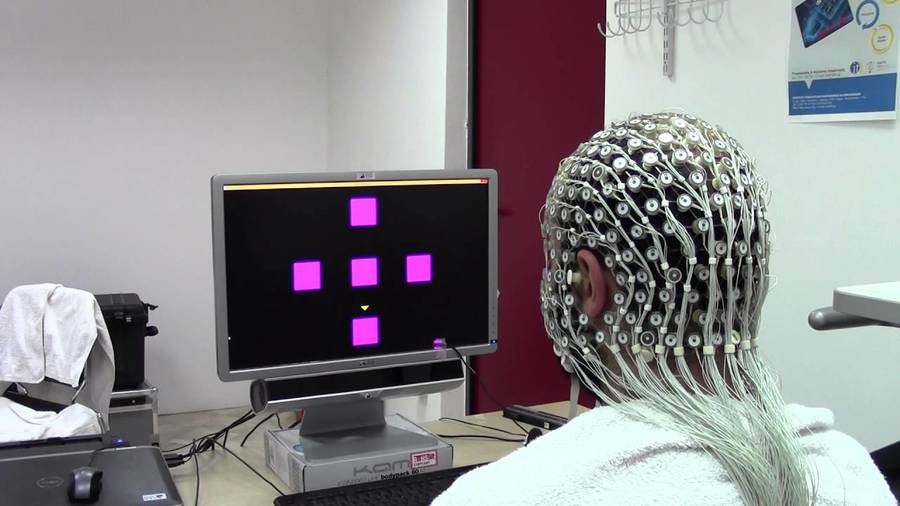
Move squares “telekenetic” EEG cap

https://rubikscubesinmovies.com/

W5 Readings

This weeks readings I was mainly focused on the relation between Ex Machina and Minority Report. As for both attempt to materialize the invisble, either conciousness or infrastructure. 

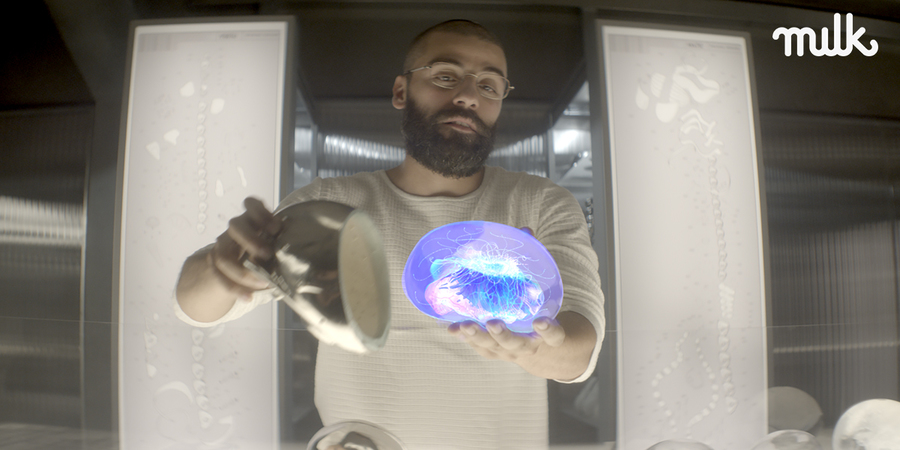
Argument 1: making the invisible “consciousness” visible through the brain in Ex Machina, in relation to making the interface visible in Minority Report.

Scene: Brain Ex Machina

https://www.youtube.com/watch?v=ruOXWHbyfjo
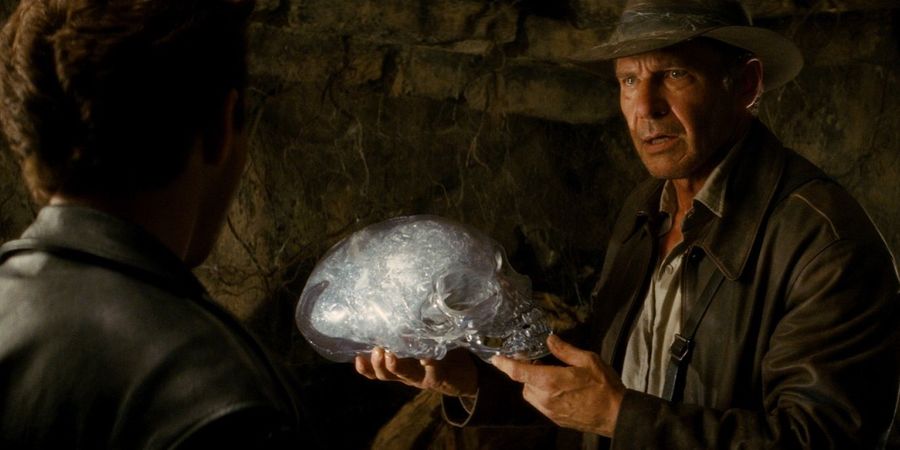
Similarly the Crystal Skull in Indiana Jones

Both films teach roughly the same moral virtue: letting go of material desire is necessary for spiritual enlightenment…

Ai as God

(Lorna Muir)

Images are transparant trapped behind a plethora screens, Minority Report chooses to communicate digital information strings of zeros and ones. Minority Report can perhaps be said to allude to the problem of invisibility by representing ‘non-materiality’ through transparant objects and architecture

(Katherine Heyles)

Theory of materiality for Weiner, “information is information, not matter or energy. No materialism which does not admit this can survive at the present day. This conception of information required artefacts that could embody it and make it real. The perception of virtuality facilitates the development of virtual technologies, and the technologies reinforce the perception.

As Katherine Heyles briefly touches upon  the term of Skeuomorph in her writing on “How we became posthuman”. As for Skeuomorphism is the design concept of making items represented resemble their real-world counterparts.

Argument 2: Bodies are concealing of our soul. the brain can function in different bodies.

Scene: Ava looking in closet, disembodiment of previous “shells”.

Ex Machina = a god from a machine

(Donna Haraway)
Why should our bodies end at the skin? Ghost in a shell.

(Katherine Hayles)
Download human consciousness into a computer
To believe that mind could be separated from body? (Hans Movarec)
The producers of Stark Trek operate from similar premises when they imagine that the body can be dematerialised into an informational pattern and dematerialised, without change, at a remote location.
The belief that information can circulate unchanged among different material substrates.
William Gibson Neuromancer when the narrator characterises the posthuman body as “data made flesh”.

Argument 3: blood as human evidence.

Scene Ex Machina After discovering that Kyoko is actually also an AI, Caleb starts doubting his humanity. He stares at his slit wrist for a while to be sure that underneath the blood-looking liquid, there is no machinery installed. To find out if he’s also just one of Nathan’s creations.

Argument 4: surveillance

Surveillance cameras and glass walls in Ex Machina and transparent interfaces within Minority Report. The human (Caleb) and cyborg (Ava) is the information (Weizer) now “visible” within the constraints of the interface (Minority Report) and the architecture (house in Ex Machina).

(Lorna Muir)

That is, cinema can be said to provide an ideal medium for considering the ways in which the invisible can be made visible, particularly in relation to a surveillance society which is increasingly characterised by ‘invisible’ technologies which are embedded into the fabric of urban architecture.

(Danielle Wong)

Moreover the surveillance cameras, the live security footage in Caleb’s bedroom and the many glass walls in the residence create the feeling that one is always being watched.

W4 Readings

Blade (Stephen Norrington, 1998)

  • John J. Jordan, “Vampire Cyborgs and Scientific Imperialism: A Reading of the Science-Mysticism in Blade,”

Donna Harraway “we are all chimeras, theorized and fabricated hybrids of machine and organism, we are cyborgs.”

To view ourselves as scientific objects.

Blade is the vampire cyborg, a hybrid of machine and organism, a creature of social reality as well as a creature of fiction (faraway) representing a mystical figure surrounded internally and externally by science.

Blade makes the transgression appealing. Presenting a vampire cyborg hero who protects the world from the nonscientific evils of mysticism by making the continued scientization of culture appear both pleasurable and appropriate. > watch Alita battle angel (2019)

Image result for alita battle angel full movie online

  • LeiLani Nishime, “The Mulatto Cyborg: Imagining a Multiracial Future,”

Hybridity

Simulation threatens the difference between “true” and “false” between “real” and “imaginary”. (Baudrillard, Simulacra and Simulations)

David: “Blue Fairy, please, please make me real” A.i. artificial intelligence (Spielberg, 2001)

AI Blue Fairy GIF - AI BlueFairy PleasePleaseMakeMeIntoARealBoy GIFs

The cyborgs very existence threatens the status of the real; thus in mourning the loss of the real, they shore up the powerful referential of the human. > Keanu Reeves in Replicas (Jeffrey Nachmanoff, 2018)

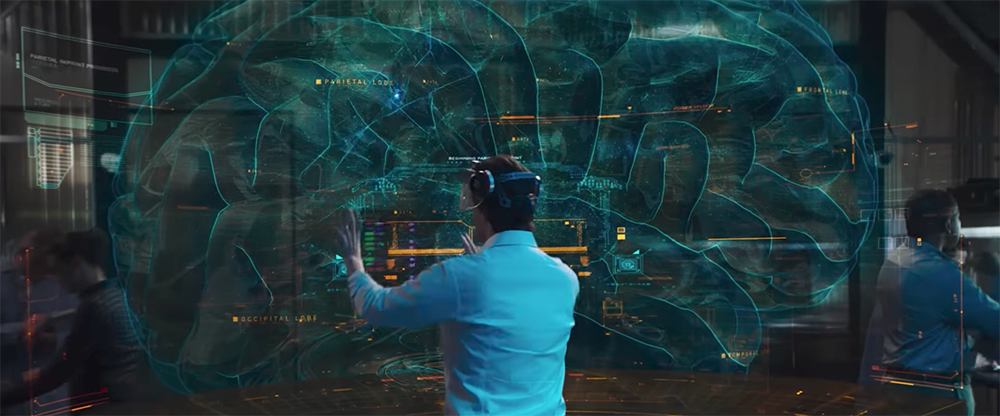
Image result for replicas film Image result for replicas film

  • Holly Jones and Nicholaos Jones, “Race as Technology: From Posthuman Cyborg to Human Industry.”

Passing and Stationarity

Changing a cyborg’s technology changes its biology. But those who change their race through passing or traveling do not change their biology. So race is not a cyborg technology.

Cyborgs are hybrids of organismal biology and machinic construction. his means that their machinic and biological components are inseparable, neither capable of existing as it is without the other.

cyborg as chameleon

the automobile

W3 Readings

Gattaca (Andrew Niccol, 1997)

  • Rosi Braidotti, “Post-Humanism: Life Beyond the Self” [from The Posthuman]

“We are all humans, but some of us are just more mortal than others.”

“Humanism’s restricted notion of what counts as the human is one of the keys to understand how we got to a post-human turn at all.”

Genealogy of anti-humanist critical theory, tracing back family histories. In relation to Braidotti (baby boomers post-generation) do I belong to the 5th Generation or 5G Network?

“Not all of us can say, with any degree of certainty, that we have always been human, or that we are only that.”

The boundaries between the categories of the natural and the cultural have been displaced and to a large extent blurred by the effects of scientific and technological advances.

  • Olivia Banner, “The Postracial Imagination: Gattaca’s imperfect science,”

“de-gene-erate”

Kinship, blood relationship

“When they look at you, they don’t see you. They only see me.”

Of course, they say every atom in our bodies was once part of a star. Maybe I’m not leaving-maybe I’m going home. Part of a star.

  • Jackie Stacey, “Masculinity, Masquerade, and Genetic Impersonation: Gattaca’s Queer Visions.”

Ultimately, the only meaning in Jerome’s life is sharing Vincent’s dream.

“territory of the new genetic imagery, copying the self.”

~

Thoughts:

On Kinship, Generation, Family Tree.

Bandersnatch, Black Mirror Episode.

The glyph from “White Bear” reappears in Bandersnatch representing two branching pathways.

Image result for bandersnatch choice tree

Your Name

Choice changes your path.